Wordpress Backup Software
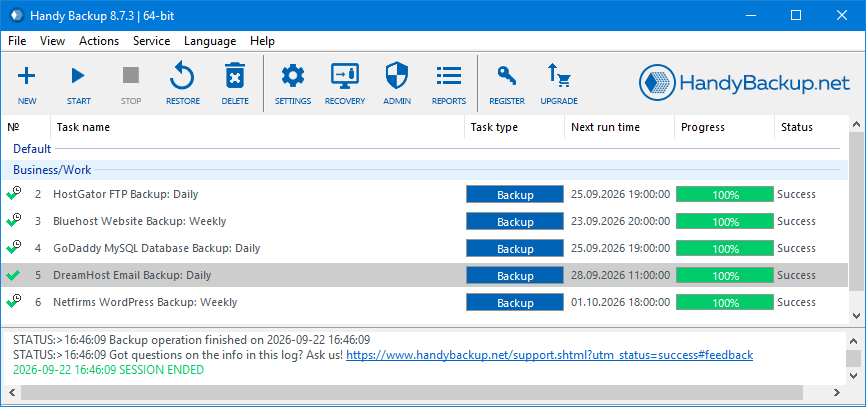
WordPress backup software from Handy Backup automatically copies website files and MySQL or MariaDB databases to local drives, NAS, FTP/SFTP servers, cloud storage, and other supported destinations.
Unlike a WordPress backup plugin, Handy Backup runs as a separate Windows application. You can keep backup copies outside the WordPress installation and hosting account, schedule backup tasks independently, and restore files or database data when needed.
 Download Trial





WordPress Backup Includes Files and Database
A complete WordPress backup normally consists of two separate parts: website files stored on the hosting server and the MySQL or MariaDB database used by WordPress.
Handy Backup can create automated tasks for both parts of the website. WordPress files can be copied through FTP, SFTP, or FTPS, while the database can be backed up through a dedicated MySQL plug-in.

WordPress Files
Back up themes, plugins, uploads, WordPress core files, wp-content, wp-config.php, and other files available on the hosting server.

WordPress Database
Back up posts, pages, comments, users, settings, plugin data, and other dynamic website information stored in the WordPress MySQL or MariaDB database.
WordPress Backup Without Installing a Plugin
Handy Backup works outside the WordPress dashboard. Instead of installing another component inside the CMS, the program connects to the hosting resources where the website files and database are stored.

Connect to Website Files
Use FTP, SFTP, or FTPS to access the WordPress directory and create scheduled copies of website files independently from the CMS itself.

Back Up the Database Separately
Create a dedicated MySQL backup task for the database used by WordPress. File and database tasks can follow the same or different schedules.

Keep Copies Outside WordPress
Store backup data separately from the original website on a local disk, external drive, NAS, remote server, or supported cloud storage.

Automate Regular Backups
Run WordPress backup tasks automatically according to an hourly, daily, weekly, monthly, or custom schedule without manually exporting the website each time.
Handy Backup vs. WordPress Backup Plugins
WordPress plugins are convenient when you want to manage backup directly from the CMS dashboard. Handy Backup uses a different approach: backup tasks run independently from WordPress and can be combined with other file, database, email, and business backup workflows.
This can be useful when the backup should remain separate from the WordPress installation or when several websites and other data sources need to be managed from the same application.
| Backup Capability | WordPress Plugin | Handy Backup |
|---|---|---|
| Runs inside WordPress | Usually | No separate Windows application |
| WordPress files | Yes | Yes FTP, SFTP, or FTPS |
| MySQL / MariaDB database | Usually | Yes dedicated database plug-in |
| Local or external-drive backup | Depends on plugin | Yes |
| NAS and network storage | Depends on plugin | Yes |
| Remote and cloud storage | Depends on plugin | Yes |
| Backup other business data | No normally limited to WordPress | Yes files, databases, email, disks, and more |
WordPress Backup Features in Handy Backup

Flexible Scheduling
Run WordPress backup tasks daily, weekly, monthly, at a selected interval, or according to another configured schedule.

Multiple Versions
Keep more than the latest copy so earlier WordPress recovery points remain available when an unwanted change is discovered later.
Incremental Backup
Copy new and changed files after the initial full backup instead of repeatedly transferring the complete WordPress file set.

Logs and Notifications
Review backup task results in logs and configure email notifications to receive information about completed operations or errors.

Encryption Options
Optionally use AES-128 or AES-256 encryption for backup archives when stored WordPress data requires additional access control.

Native File Format
When compression and encryption are disabled, files remain in their original formats and can be browsed directly in backup storage.
Choose Where WordPress Backups Are Stored
WordPress backup copies do not have to remain on the same hosting account as the live website. Handy Backup lets you choose separate local, network, remote, or cloud destinations.

Local and network: internal disks, external HDD or SSD devices, USB storage, network folders, and NAS.
Remote servers: FTP, SFTP, FTPS, and WebDAV destinations available to the backup computer.
Cloud storage: Amazon S3, S3-compatible services, Google Drive, OneDrive, Dropbox, and other supported destinations.
Why WordPress Users Recommend Handy Backup
Recommended Solution
Lifetime license

Handy Backup Small Business
The Small Business edition is the ultimate solution for WordPress automatic backup, providing a complete set of powerful plug-ins right out of the box. Designed for growing teams and professional use, it gives you everything you need to protect your website with ease and confidence.
How to Back Up a WordPress Site with Handy Backup
A complete WordPress backup normally requires two tasks: one for website files and another for the MySQL or MariaDB database. Each task can use its own schedule and destination.
-
Create a backup task. Open Handy Backup, start the New Task Wizard, and select Backup.
-
Select the connection. Choose FTP, SFTP, or FTPS according to the connection options available for the WordPress hosting account.
-
Select the website files. Connect to the server and choose the WordPress directory, including themes, plugins, uploads, configuration files, and other required data.
-
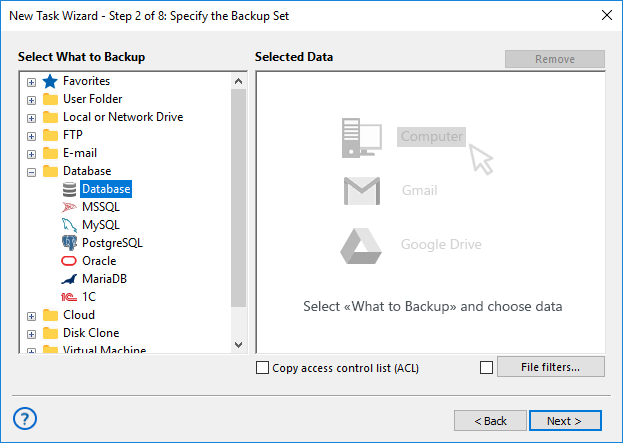
Create a database task. Start another backup task, open the Database group, and select MySQL for the WordPress MySQL or MariaDB database.
-
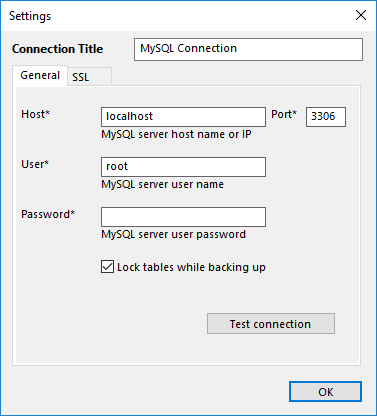
Create the connection. Enter the database host, port, username, password, and other connection settings provided by the hosting service.
-
Select the database. Open the configured connection and choose the database used by the WordPress installation.
-
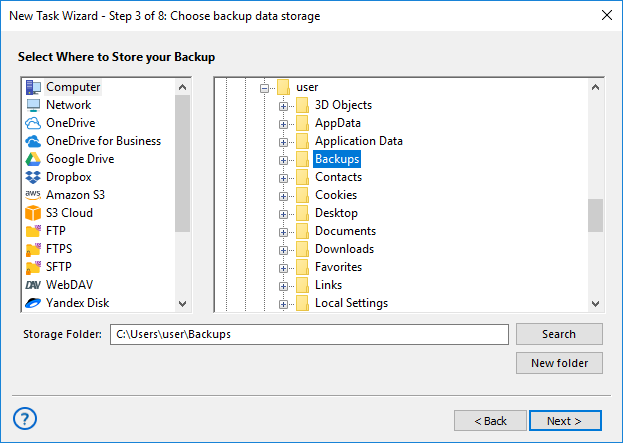
Select storage. Choose a local disk, external drive, NAS, network folder, FTP/SFTP server, supported cloud service, or another available destination.
-
Set backup options. Configure the backup method, versions, compression, encryption, and other required task settings.
-
Create a schedule. Set when each task should run, save the configuration, and start the first backup immediately or wait for the scheduled time.
Restore WordPress Files and Database
Handy Backup can create restore tasks from previously saved WordPress backups. Individual website files, folders, or database data can be recovered when the corresponding backup is available.
For a complete website recovery, restore both the required WordPress files and the corresponding database. The destination can also be changed when data needs to be recovered to another folder, server, or environment.

Restore Selected Files
Select individual files or folders instead of restoring the complete website backup when only part of the WordPress installation needs to be recovered.
Restore Database Data
Recover the WordPress database when posts, settings, users, plugin data, or other database content needs to be returned from an earlier backup.
Build a WordPress Recovery Process, Not Only a Copy
Automate
Run file and database backup tasks regularly instead of relying on occasional manual copies created from the hosting account.

Monitor
Review logs and email notifications so connection, permission, database, or storage errors are not overlooked.
Test Recovery
Restore representative website files and database data periodically to confirm that the recovery process works as expected.
FAQ About WordPress Backup Software
Can Handy Backup back up an entire WordPress site?
Yes. A complete WordPress backup normally includes both website files and the MySQL or MariaDB database. Handy Backup can create separate automated tasks for both parts of the site.
Can I back up WordPress without installing a plugin?
Yes. Handy Backup runs as a separate Windows application and connects to supported hosting resources directly. It does not need to be installed inside the WordPress dashboard.
Does a WordPress file backup include the database?
No. WordPress files and the MySQL or MariaDB database are separate data sources. For a complete backup, create a file backup task and a database backup task.
Can I save a WordPress backup to my computer or NAS?
Yes. Supported destinations include local and external disks, network folders, NAS devices, remote servers, and supported cloud storage.
Can I back up WordPress to cloud storage?
Yes. Handy Backup supports backup to Amazon S3 and S3-compatible storage, Google Drive, OneDrive, Dropbox, WebDAV, and other available destinations.
Does the Handy Backup tool support incremental WordPress backup?
Yes. Incremental backup can copy files changed since the previous backup instead of transferring the complete WordPress file set during every scheduled run.
Can I restore individual WordPress files?
Yes. A restore task can be used to select particular backed-up files or folders rather than recovering the complete WordPress website file set.
How often should a WordPress site be backed up?
The schedule should reflect how frequently the website changes. A mostly static site may need less frequent copies, while an active blog, business site, or WooCommerce store may require daily or more frequent backups.
Video Tutorial: Wordpress Backup Software
In the next video, you'll see how to copy a full website with its database. You'll learn how to connect using FTP and work with the database engine. It’s a step-by-step guide packed with everything you need to know to backup your WordPress site.
Download Trial
Handy Backup is one of the best WordPress backup solutions, offering exceptional flexibility and power.
Unlock the full potential of Handy Backup with a 30-day free trial — experience the ease of protecting your site today!