Medical Data Backup Software
Medical data backup software helps healthcare organizations create recoverable copies of databases, patient documents, diagnostic files, email, application data, and Windows systems. Handy Backup combines these workloads in scheduled tasks with storage, encryption, versioning, and reporting options. Use this healthcare backup software for a single clinic workstation, a Windows Server, or a centrally managed network. You can write copies to local disks, external drives, NAS, remote servers, cloud services, and S3-compatible storage.
 Download Trial
Handy Backup Ratings on Independent Review Platforms




What Healthcare Data Can Be Backed Up?
A healthcare backup plan may cover several data sources rather than one database. Handy Backup lets administrators create separate tasks for each workload and assign an appropriate schedule, destination, and retention policy.

Medical Databases
Back up MySQL, MariaDB, PostgreSQL, Microsoft SQL Server, Oracle, and other supported databases used by clinic applications, billing systems, laboratory tools, or electronic record platforms.

Documents and Records
A patient data backup can include PDFs, office documents, spreadsheets, reports, exports, scanned forms, and other files available on a protected computer, server, or network share.

Images and Application Files
Include X-ray, CT, MRI, ultrasound, and other diagnostic files when they are accessible through the file system or a supported data source. Application folders can be protected in the same workflow.

Workstations and Servers
Create file-level copies or disk images of supported Windows systems. Healthcare email, shared folders, and other business data can also be included in separate automated tasks.
Medical Database Backup for Clinic Applications
Many practice-management, billing, and record systems depend on a database. Handy Backup uses dedicated plug-ins and supported database interfaces to create consistent copies without treating the database as an ordinary group of files.
Administrators can select an entire database or particular tables where the connector permits it. Uncompressed MySQL backups are stored as readable SQL dumps; other engines use their supported backup method or native format.

Dedicated Database Plug-ins
Use connectors for MySQL, MariaDB, PostgreSQL, Microsoft SQL Server, Oracle, IBM DB2, and other listed systems. Available methods depend on the selected database and edition.

Repeatable Backup Jobs
Schedule recurring tasks, retain several versions, and receive logs or email notifications. Pre- and post-task actions can coordinate backups with scripts or maintenance procedures.
Healthcare Data Backup Features

Flexible Scheduling
Run tasks daily, weekly, monthly, at a selected interval, or after a system event. Different data sources can follow different schedules.

Multiple Versions
Keep more than the latest copy and set retention rules. Earlier recovery points remain available when a change is discovered later.

Encryption Options
Apply AES-128 or AES-256 encryption to backup archives. SFTP and FTPS provide protected transfer options for remote destinations.

Logs and Notifications
Review task results in detailed logs and use email notifications to detect warnings or failures without opening the application.
Choose Where Medical Backups Are Stored
Keep healthcare backups on storage selected and administered by your organization. Separate destinations can be assigned to fast local recovery and offsite retention.

Local and network: internal disks, external HDD or SSD devices, USB storage, shared folders, NAS, and SAN.
Remote servers: FTP, SFTP, FTPS, and WebDAV destinations under the organization's control.
Cloud and object storage: Amazon S3, S3-compatible services, Google Drive, OneDrive, Dropbox, and other supported targets.
Important: When a backup contains regulated health information, verify that the chosen provider, account, configuration, access policy, contract, and complete workflow meet the rules applicable to your organization.
Medical Data Security and HIPAA Considerations
According to the HHS summary of the HIPAA Security Rule, regulated organizations must apply appropriate administrative, physical, and technical safeguards to electronic protected health information. Its contingency-plan provisions also address data backup, recovery, and continued operation during emergencies.
Handy Backup provides scheduling, encryption, versioning, storage, logging, and recovery capabilities that can support a broader compliance process. Software features alone do not make an organization or backup workflow HIPAA compliant. For the regulatory context and implementation considerations, see our guide to HIPAA backup requirements.
How to Back Up Medical Data with Handy Backup
This example uses MySQL for a medical database backup. The same task wizard can protect documents, application folders, disk images, and other supported sources by selecting the corresponding plug-in.
-
Create a backup task. Open Handy Backup, start the New Task Wizard, select Backup, and enable Advanced Mode when additional options are required.
-
Select the source. Choose files, folders, a disk image, email, or a database plug-in. For this example, open the Database group and select MySQL.
-
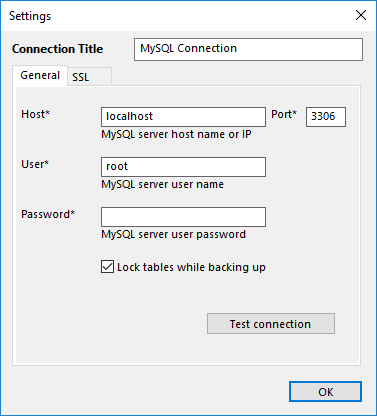
Create the connection. Enter a configuration name, database host, port, username, and password. Use an account with the permissions required to read the selected data.
-
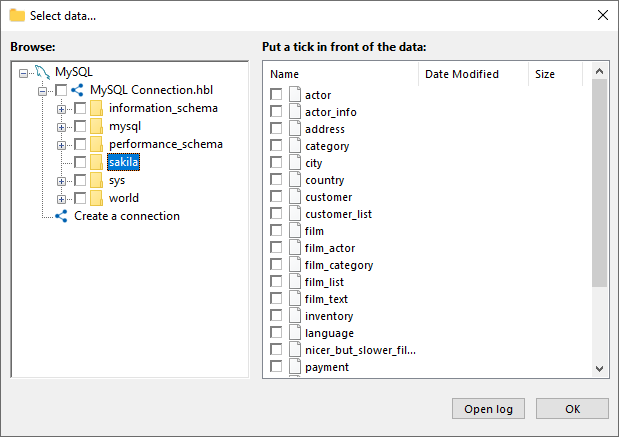
Choose the data. Open the configured connection and select the databases or tables to include. Confirm the selection and continue.
-
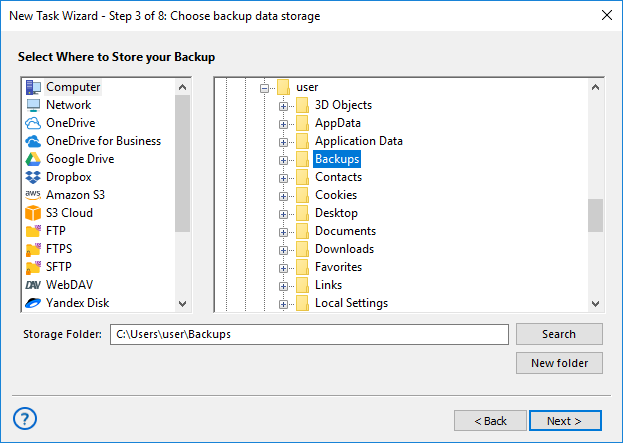
Select storage. Choose a local disk, external drive, NAS, network folder, remote server, supported cloud service, or S3-compatible destination.
-
Set backup options. Configure the backup method, version retention, compression, and AES encryption according to the organization's policy.
-
Create a schedule. Choose the required run time and recurrence. Add email notifications or pre- and post-task actions when needed.
-
Finish and verify. Name the task, run the first backup, review its log, and perform a test restore before relying on the workflow.
Medical Data Backup Review
Recommended Solution
Lifetime license

Handy Backup Small Business
Handy Backup Small Business is designed for clinics, medical practices, laboratories, and other small healthcare organizations that need automated backup of databases, files, and application data. It supports scheduled backup, versioning, encryption, and storage on local, network, and cloud destinations.
Backup for One Clinic or a Healthcare Network

One Computer or Server
Protect a clinic workstation with a desktop edition. For database plug-ins and workloads located on one Windows Server, use Handy Backup Small Business.

Multiple Endpoints
Use Handy Backup Server Network to manage backup tasks across supported Windows and Linux computers from one central control point.
Build a Recovery Process, Not Only a Copy
Automate
Match task frequency to how quickly each source changes instead of applying one schedule to every workload.

Monitor
Review logs and notifications after scheduled runs so connection, permission, and storage errors are not overlooked.

Test Recovery
Restore representative files and databases regularly to confirm that the documented recovery procedure works in practice.
FAQ About Medical Data Backup Software
What is medical data backup?
Medical data backup is the process of creating recoverable copies of healthcare databases, patient documents, diagnostic files, email, application data, or complete systems. Copies are stored separately from the active source and retained according to the organization's recovery and regulatory requirements.
Which healthcare databases can Handy Backup protect?
Handy Backup supports MySQL, MariaDB, PostgreSQL, Microsoft SQL Server, Oracle, IBM DB2, and additional systems through dedicated or generic connectors. The available backup method and required edition depend on the database platform.
Can medical images be included in a backup?
Yes, when the diagnostic images are available as files through a supported local, network, or remote source. Handy Backup copies those files without interpreting their clinical content. Data held only inside a specialized system may require that system's supported export or database interface.
Where can healthcare backups be stored?
Supported destinations include local and external disks, network folders, NAS and SAN devices, FTP, SFTP, FTPS, WebDAV, Amazon S3, S3-compatible storage, Google Drive, OneDrive, Dropbox, and other available services.
Does medical backup software make an organization HIPAA compliant?
No software feature alone establishes HIPAA compliance. Handy Backup offers technical capabilities such as encryption, scheduling, versioning, logging, and recovery, but the organization remains responsible for risk analysis, access controls, policies, contracts, storage configuration, testing, and all other applicable requirements.
How often should clinic data be backed up?
The interval should follow the acceptable recovery point for each source. A frequently updated patient database may need shorter intervals than archived documents. Define the schedule through risk analysis, document it, monitor task results, and test restoration regularly.