FoxPro Database Backup and Recovery
FoxPro backup remains important for organizations running legacy Visual FoxPro applications. Although Microsoft discontinued Visual FoxPro development, databases created with this technology are still used in accounting, inventory management, reporting, and other business systems.
Handy Backup Professional provides an automated way to back up FoxPro databases through an ODBC connection. You can select database tables, configure scheduled tasks, store copies on local or remote storage, and restore data.
For organizations maintaining older applications, regular Visual FoxPro database backup helps preserve business records and provides recovery points before software changes, migrations, or hardware replacement.
 Download Trial


Why Visual FoxPro Databases Still Need Backup
Visual FoxPro is a discontinued Microsoft database development environment. Extended support ended in January 2015, but applications built with FoxPro can remain operational for many years. Some organizations continue using these systems because they contain specialized business logic, historical records, or integrations that are difficult to replace.
Legacy Business Applications
Preserve databases used by older accounting, warehouse, manufacturing, and administrative applications that remain essential to daily operations.
Database File Integrity
Maintain recoverable copies of database tables, memo files, indexes, and other components that may be affected by file corruption or hardware failure.
Migration and Maintenance
Create backup copies before updating legacy applications, replacing workstations, modifying database structures, or migrating records to another system.
What Files Should Be Included in a FoxPro Backup?
Visual FoxPro databases can consist of several related files. Backing up only the main DBF table may not be sufficient to restore the complete application dataset. The required files depend on how the database and application were designed.
| File Extension | Purpose | Backup Considerations |
|---|---|---|
| .DBF | Database table containing records and field definitions. | Include the required tables and their related files. |
| .FPT | Memo file containing variable-length text or binary data associated with a DBF table. | Preserve together with the corresponding DBF file. |
| .CDX / .IDX | Index files used to organize and retrieve database records. | Include indexes when required by the application or recovery procedure. |
| .DBC / .DCT / .DCX | Database container files storing definitions, properties, and related metadata. | Preserve the complete database container file set. |
| .NDX | Index format associated with some older xBase applications. | Include when used by the particular legacy application. |
Important: A logical backup through ODBC and a file-level copy of the complete FoxPro application directory serve different purposes. ODBC provides access to database content, while file backup can preserve related application files, indexes, and database containers. The selected recovery method should be tested against the actual application.
FoxPro Backup Features in Handy Backup
Handy Backup combines ODBC database access with automatic backup software capabilities. Administrators can configure repeatable backup tasks without manually exporting database information each time a copy is needed.

ODBC Database Access
Use the Database plug-in with a configured FoxPro ODBC driver to select database content for backup.

Automatic Scheduling
Run FoxPro backup tasks daily, weekly, monthly, or at configured intervals according to operational requirements.

Flexible Storage
Save copies to local disks, external drives, NAS storage, FTP/SFTP servers, or cloud destinations.

Encryption and Compression
Configure AES encryption and ZIP backup compression when required by your storage policy.

Backup Versions
Keep previous copies to provide additional recovery points before application updates or database modifications.

Logs and Notifications
Review task execution logs and configure email notifications to identify completed operations or backup errors.
FoxPro Backup Through ODBC
Handy Backup Professional includes the Database plug-in, which can work with Visual FoxPro data through a properly configured ODBC driver. This method allows users to access database content and select the information included in a backup task.
The FoxPro ODBC driver must be installed and configured independently of Handy Backup. The connection settings, driver architecture, and database permissions must match the existing FoxPro environment.
When to Use ODBC Backup
- When the FoxPro database is accessible through a working ODBC connection.
- When specific tables or database content need to be selected.
- When regular database exports need to be automated.
- When backup tasks are managed alongside other database operations.
When to Use File Backup
- When the complete database directory must be preserved.
- When DBF, FPT, CDX, and database container files must remain together.
- When application configuration files or additional resources are required for recovery.
- When a restorable copy of the legacy application environment is needed.
For a broader overview of database backup methods, see Database Backup Software.
How to Back Up a FoxPro Database with Handy Backup
The following instructions explain how to create an automatic FoxPro backup task through ODBC using Handy Backup Professional. Before starting, verify that the FoxPro ODBC driver is installed, configured, and able to access the required database.
-
Configure the FoxPro ODBC driver. Install and configure the appropriate driver according to its documentation. Verify the connection to the FoxPro database and check that the required tables are accessible.
-
Create a backup task. Open Handy Backup Professional, start the New Task Wizard, and select Backup. Choose Advanced Mode if you need additional backup options.
-
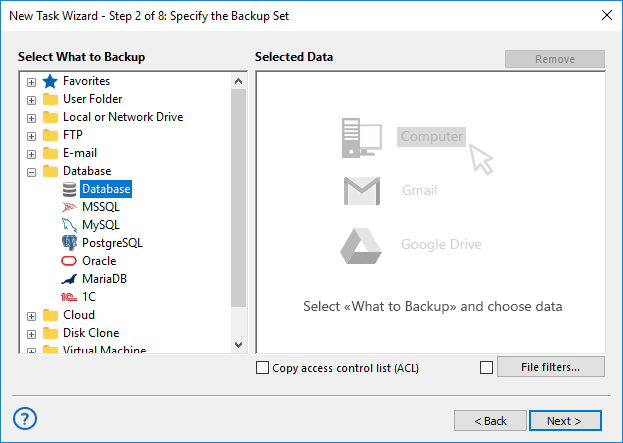
Select the Database plug-in. On Step 2 of the wizard, expand the Database group and open the Database plug-in to configure the ODBC database connection.
-
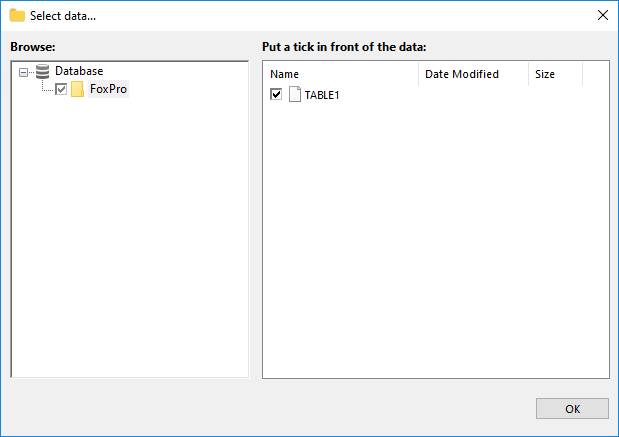
Select the database content. Open the configured FoxPro database connection and mark the tables or other available database objects that you want to include in the backup.
-
Choose the backup destination. Click OK and continue through the wizard. Select a local drive, network location, external storage, or another destination available in Handy Backup.
-
Configure the schedule and options. Set automatic execution, version retention, compression, or encryption as needed. Save the task and run the initial backup.
For additional wizard settings and task management options, consult the Handy Backup User Manual.
Note: The ODBC method depends on the installed FoxPro driver and its access to the database. Test the resulting backup and recovery procedure before relying on it for production data. If the application uses related database container, memo, or index files, consider a separate file backup task to preserve the complete file set.
Backing Up FoxPro DBF Files Directly
In addition to ODBC backup, Handy Backup can copy Visual FoxPro database files as ordinary files. This method is useful when administrators need to preserve the database directory, application resources, and related files together.
Create a file backup task using the Computer plug-in and select the directories containing the FoxPro application data. Include the required DBF, FPT, CDX, IDX, DBC, DCT, and DCX files, as well as any other files needed for recovery.
Prepare a Consistent File Copy
FoxPro applications may modify several related files during normal operation. Copying these files while records are being updated can produce an inconsistent backup. Whenever possible, coordinate the backup with the application maintenance window or use an application-specific procedure that ensures the files are in a consistent state.
Keep Earlier Backup Versions
Use incremental backup or other appropriate backup methods to maintain recovery points. Previous versions can be useful when database corruption or an unwanted change is discovered after the most recent backup.
Where to Store FoxPro Database Backups
Backup storage should be separate from the original FoxPro database whenever possible. Handy Backup allows administrators to select storage according to their infrastructure, retention requirements, and recovery procedures.
Local, External and NAS Storage
Save database copies to local disks, external USB drives, shared folders, or NAS devices. Separate storage makes it easier to recover data after a failure of the original workstation or drive.

Remote and Cloud Storage
Store additional copies on FTP/SFTP/FTPS servers, Amazon S3, S3-compatible storage, Google Drive, OneDrive, or other available destinations. See cloud backup software for more information.
For important legacy databases, consider the 3-2-1 backup rule: maintain multiple copies, use different storage types, and keep at least one copy offsite.
How to Restore a FoxPro Database Backup
Handy Backup provides restore tasks for recovering data from previously created backups. The exact restoration procedure depends on whether the database was backed up through ODBC or copied as a set of files.
Restore an ODBC Database Backup
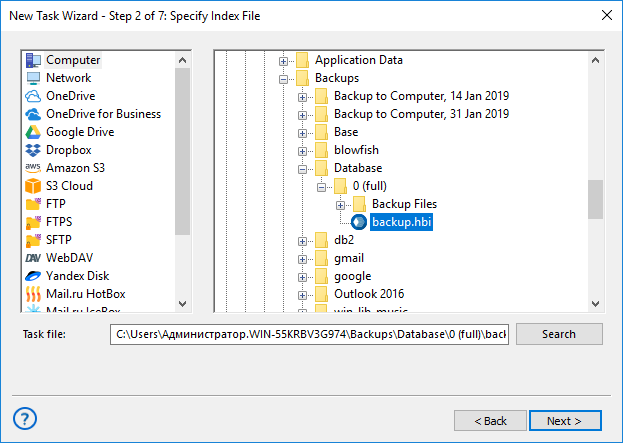
Open Handy Backup, create a restore task, and select the storage location containing the FoxPro backup. Locate the backup index file backup.hbi and continue through the Restore Wizard.
When restoring to another location, use Advanced Mode and the Change Location option where applicable. Verify the target database connection, permissions, and restored content before returning the application to normal operation.
Restore FoxPro Database Files
For file-based backups, restore the required DBF, FPT, CDX, and other associated files to a recovery directory. Ensure that the original application is not actively modifying the files being replaced.
Verify the Restored Database
Open the recovered database with the appropriate FoxPro application or database tools. Check that tables, memo fields, indexes, and application operations behave as expected before using the restored data in production.
Which Handy Backup Edition to Choose?
Handy Backup Professional is the recommended edition for the FoxPro ODBC backup method described on this page. It includes the Database plug-in and tools for scheduling backups, selecting storage, managing versions, and restoring data.
For organizations that also need backup of other business databases, virtual machines, or applications, Handy Backup Small Business provides additional functionality. For centrally managed backups across multiple computers, see Handy Backup Server Network.
Recommended Solution
Lifetime license
Handy Backup Professional
Handy Backup Professional provides automated Visual FoxPro database backup through ODBC, allowing users to select database tables and schedule regular backups. The software also offers flexible storage options, encryption, versioning, and recovery tools to help maintain legacy FoxPro applications and preserve important business data.
FAQ About FoxPro Database Backup
Can Visual FoxPro databases still be backed up?
Yes. Although Visual FoxPro is discontinued, its databases can still be backed up using appropriate database access tools or file-copy methods. Handy Backup Professional can create scheduled backups through a configured FoxPro ODBC connection, while file backup tasks can preserve DBF files and related application data.
Does Handy Backup require a FoxPro ODBC driver?
Yes, when using the ODBC database backup method. The appropriate FoxPro ODBC driver must be installed and configured separately. Driver compatibility, database permissions, and connection settings should be verified before creating the backup task. File-level backup does not require an ODBC connection.
Is backing up DBF files enough to restore a FoxPro database?
Not always. Visual FoxPro applications may use FPT memo files, CDX or IDX indexes, DBC database containers, and other associated files. A complete file-based backup should preserve the files required by the application and maintain consistency between related database components.
Can FoxPro database backups run automatically?
Yes. Handy Backup allows users to configure scheduled backup tasks, select storage destinations, maintain previous versions, and review execution logs. For file-based backups, schedule tasks when the FoxPro application can provide a consistent set of database files.
Which Handy Backup edition is needed for FoxPro ODBC backup?
Handy Backup Professional includes the Database plug-in used for FoxPro ODBC backup. It also provides scheduling, backup storage selection, encryption, versioning, and restoration capabilities.